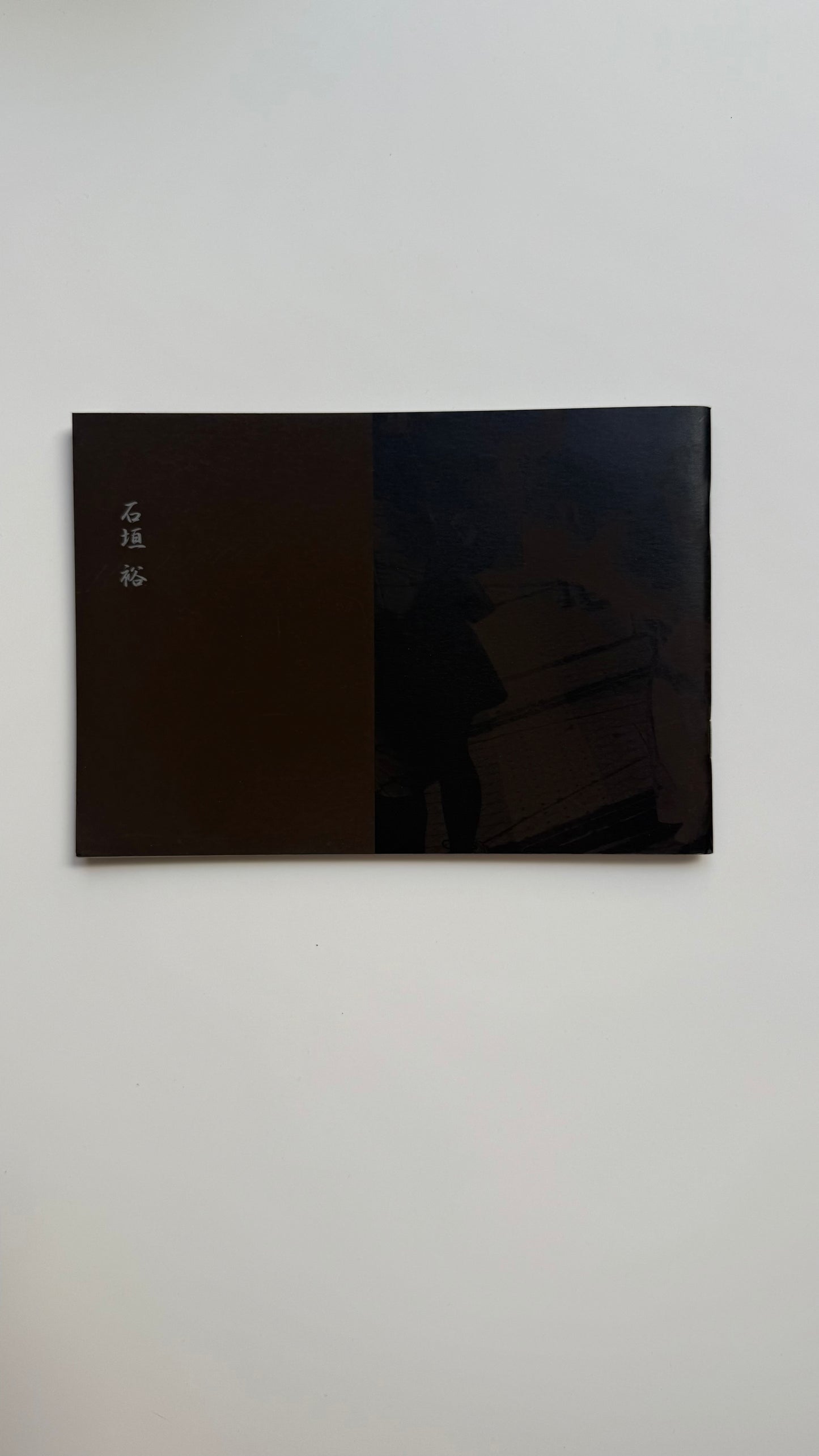


The Range of Demands by Hiroshi Ishigaki
35mm, Monochrome, 11 x 14 in.,
A beautiful book of monochrome prints by Hiroshi Ishigaki
* this item is in great used condition
"The mechanical nature of the camera is the beginning of something special and photographic. However, it is not the beginning of photographic art. The alpha of photographic art is the person behind the camera. Moreover, it is a person as a social being - a social human being." In his 1932 essay "Return to Photography" published in *Koga*, Nobuo Ina argues that "the person who holds the camera" must be a social being. Photography is an art form well-suited to recording, reporting, interpreting, and critiquing social life and nature. For its content to be excellent, the photographer must be excellent. The relationship between the camera and the person, between photography and society, must strive for a better relationship through the socially conscious individual. Be an unwavering presence as an individual. Photography as a modern art form, created by the camera as a machine and the subjective human being. The era in which meaning was given not only to the subject but also to the act of taking the photograph, as seen in Nobuo Ina's modern photography and post-war realism photography, is over. It's unlikely that the photographer is consciously taking pictures with any particular role in mind, nor does the existence of a photographer hold any special meaning as a subject. But even now, there is still a human being behind the camera. Unreliable. That is me. Even if I am not an excellent person, I turn the camera towards the world I live in. What kind of place is it? Who is with me? What can be seen simply by living and simply taking pictures? Without any particular role, simply trying to know. Between 2013 and 2015, I wandered around Tokyo on a whim. I didn't go to any particular places, but compared to long ago, I noticed a lot more political language and actions in the streets. Real-world politics can sometimes be invisible, unnoticed, but in present-day Japan, the conservatism of power, political dysfunction, and the manifestation of public opinion against them are becoming noticeable issues in everyday life. Even so, in this country where self-realization, self-discovery, and the desire to be "myself" and no one else are all misled by capital and lead nowhere, how should one live and behave in order to remain a free and spontaneous individual "myself"? Yutaka Ishigaki